
Introduction
In modern society, saving children's lives is regarded as a universal value, and practices based on this principle have recently involved removing children from their caregivers before they suffer fatal harm. In countries such as the United States, which have implemented child abuse prevention measures, a child protection system operates on this idea: by encouraging reports, abusive caregivers are identified, families are investigated, and children are removed for their safety. Japan has also adopted such practices from these countries, classifying children and caregivers according to the level of risk of abuse, and utilizing risk assessments whereby Child Guidance Centers temporarily take children into protective custody if the risk is deemed high. Along with this, the notion has emerged that being able to competently use risk assessment is what defines the Social Work Profession.
However, even though value judgments are involved in selecting risk factors, in Japan, the evaluation of “objectivity” is monopolized by professionals, while non-professionals are unaware of why certain factors are considered risks, or even that they are being assessed. Therefore, after reviewing how risk assessment was introduced into child and family social work in Japan, this study aims to expose the resulting asymmetry between professionals and caregivers brought about by specialist knowledge regarding risk.
Reason for introducing risk assessment
The social problematization of child abuse in Japan began in the 1990s, the most notable feature of which is that abuse was conceptualized less as a socioeconomic issue and more as an issue of individual pathology within the family. Specifically, abuse was attributed to parents’ psychological problems or mental pathology, mirroring the dominant American understanding of the issue following the Battered Child Syndrome, which served as a catalyst for child abuse recognition in the United States.
Indeed, up until the mid-1990s, much of the reporting on child abuse in Japan was structured to introduce the country’s “backward situation,” referencing the current state and countermeasures in the United States. The scenario wherein new social issues are imported from the US is a common method in Japan for advocating a problem and demanding social interventions. Under the framework of viewing child abuse as family pathology, reliance on voluntary consultations by caregivers was seen as limited (Kempe et al., 1962). Instead, it came to be regarded as more reliable to hypothesize, based on expert theories and empirical knowledge, factors thought to be associated with child abuse, identify risk factors with statistical significance, and assess the risk of abuse accordingly.
Against this background, risk assessment was introduced to Japan from the late 1990s as a new method for detecting child abuse, and large-scale research studies to identify unique risk factors for child abuse received grants and other support from the Ministry of Health, Labour and Welfare. Factors such as remarriage, young mothers, children with disabilities, or twins—factors that, in themselves, did not constitute abuse and had not been viewed as related to its occurrence—came, mediated by the concept of risk, to be strongly associated with abuse.
The politics of risk allocation
In the present-day context, the concept of risk, packaged with individual responsibility, is applied to all aspects of society. However, it should be noted that, in practice, only certain elements are recognized or highlighted as risks. The entire process of identifying risk undoubtedly involves the intentions of specialists and those formulating preventive policy, along with political selections, but these political intentions and consequences are obscured by the ostensibly objective “numbers” and “statistical probabilities.” As mentioned earlier, Japan’s child abuse countermeasures were strongly driven by a motive for latecomers to “catch up” with frontrunners, and the importation of risk assessment typified this. Yet, debates and critical perspectives on risk assessment in the countries of origin have rarely been introduced.
To begin with, risk emerges as a “contested concept” (Walklate & Mythen, 2010). In the field of child abuse countermeasures, debates have arisen regarding the most effective way to assess risk, particularly in the shift toward “risk-based approaches.” While risk assessment through mathematical statistics is evidence-based, there has been discussion that tools relying on consensus judgments are more comprehensive, as they can incorporate a greater number of variables, and may allow for more flexible use (White & Walsh, 2006).
When developing assessment tools, Robert Dingwall, who reviewed prior studies on predicting child abuse, identified both a “definitional fallacy”—stemming from the fact that research using risk to predict child abuse has seen the discourse on child abuse expand far beyond the original focus on children’s injuries—and a “statistical fallacy,” namely the lack of empirical evidence for predicting not current but future harm (Dingwall, 1989).
Moreover, many pilot studies that identify risk factors only examine groups already determined to be abused, without using control groups. Additionally, regarding the use of risk assessment, it has been pointed out that Child Protection Agencies wield significant authority. The various experiences and opinions of caregivers are forcibly fitted within the confines of risk assessment, silencing their authentic voices in the process.
Furthermore, objections or counterarguments toward these agencies or social workers are not treated as resistance to control or domination, but rather processed as “an even higher level of risk” in themselves (Brown, 2006). By focusing on risk, children and families are separated from their sociocultural contexts, and the strengths, resources, or capabilities that families may possess are overlooked. “Deficits in parenting” measured by factors such as parental history of abuse, illness, or disability are given far more weight than “family strengths.”
Concerns have also been raised regarding the stigmatization and essentialization of risk factors. In many cases, risk assessment further marginalizes those already socially excluded—such as individuals of lower socioeconomic status or ethnic minorities—by officially labeling them with a scientifically authoritative, yet difficult-to-contest, mark of “high risk” (Keddell, 2015 & Pollack, 2010). In doing so, social issues such as poverty, lack of safety, and insufficient quality housing are rendered invisible, and individual responsibility is imposed under the guise of risk.
From the standpoint of statistical fundamentals, there are objections to applying risks, determined based on past events in a separate group that does not include the individual, to the individual in the current group. In Japan as well, the procedures of survey studies purportedly providing statistical support for risk factors have involved serious problems. For example, after grouping those identified as the “abuse-experienced group,” other variables are cross-tabulated one after another to point out trends within the group.
Ultimately, among the variables, those significantly associated with abuse scores and the abuse score itself are included in a multiple regression analysis to identify predictors of abuse. The validity of these analyses and the conclusions drawn from them depended on the validity of how the “abuse-experienced” group was identified. However, the “abuse-experienced group” is an arbitrarily determined group lacking clear justification. Adjusting the cut-off point for group delineation would also alter the statistical significance.
Discussion
As noted above, the statistical basis for the calculation was a population consisting of others besides the self. Risks—potential dangers that have not yet occurred—extracted from surveys conducted on different populations are applied to the population in question. The fact that the mathematical management of risk has come to be actively adopted in policy arenas can be understood as a shift in the mode of governance from disciplinary forms, which impose moral transformation on individuals, to post-disciplinary risk governance that targets populations. In other words, by treating humans as a collective object of inquiry and using probabilistic dangers, the entire population can be caught within a net of child abuse prevention.
According to Robert Castel, in preventive policies based on risk, there is no need for individuals to actually display symptoms of danger or abnormality, nor is it necessary for specific conflict situations to be presented; rather, it is sufficient that the characteristics designated as risk factors by the specialists responsible for preventive policy merely issue a warning (Castel, 1991). This implies that when a social worker visits a home to check whether danger actually exists, not only is a relationship between the carer and the cared-for no longer required, but even a relationship between the controller and those being controlled is no longer necessary.
Conclusion
Child abuse prevention measures based on risk assessment are a modality that, unconstrained by conventional ideas focused on individual subjects or concrete persons, uses pre-identified risk factors to encompass the entire population within a surveillance network. Implicitly, expert institutions and professionals adopt the premise that everyone should live without conflict with the mainstream culture of the community.
When experts or professional agencies claim that the risk assessments they develop—grounded in their own judgment and hypotheses—are “objective,” they thereby monopolize the very evaluation called “objectivity.” Furthermore, resisting expert judgment and specialized knowledge itself came to be understood as a risk. In other words, resistance itself was incorporated as an element of the power relationship between experts and non-experts. Without clarifying the relationship between expertise and power in such processes of subjection, the politicization of social work cannot truly be discussed.
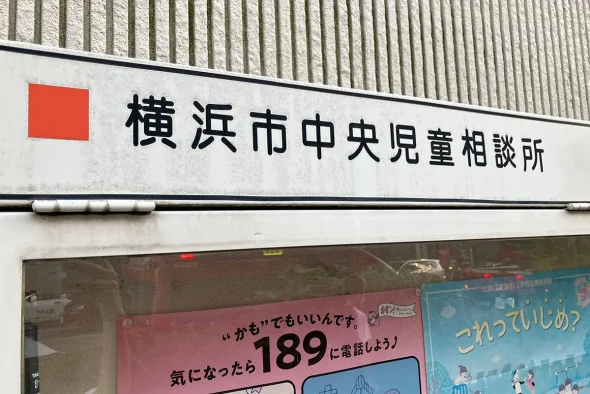
Child guidance center in Yokohama
References
Brown, Debra J. (2006). Working the System: Re-Thinking the Institutionally Organized Role of Mothers and the Reduction of “Risk” in Child Protection Work. Social Problems, 53(3), 352-370.
Castel, R. (1991). From Dangerousness to Risk. Graham, B., Colin, G., & Peter, M(eds.), The Foucault Effect: Studies in Governmentality (pp.281-298). University of Chicago Press.
Dingwall, R. (1989). Some Problems about Predicting Child Abuse and Neglect. In Olive Stevenson (ed.), Child Abuse: Public Policy and Professional Practice (pp. 28-53). Brighton: Wheatsheaf.
Keddell, E. (2015). The Ethics of Predictive Risk Modelling in the Aotearoa/New Zealand Child Welfare Context: Child Abuse Prevention or Neo-Liberal Tool?. Critical Social Policy, 35, 69-88.
Kempe, C. Henry, Frederic N. Silverman, Brandt F. Steele, William, D., & Henry K. Silver. (1962). The Battered-Child Syndrome. Journal of the American Medical Association, 181 (1), 17-24.
Pollack, S. (2010). “Labelling Clients “Risky” : Social Work and the Neo-Liberal Welfare State”. British Journal of Social Work, 40(4), 1263-1278.
Walklate, S., & Mythen, G. (2010). Agency, reflexivity and risk: cosmopolitan, neurotic or prudential citizen?. The British Journal of Sociology, 61(1), 45-62.
White, A., & Walsh, P. (2006). Risk assessment in child welfare: An issues paper. Centre for Parenting & Research, Funding & Business Analysis Division. Ashfield: NSW Department of Community Services.